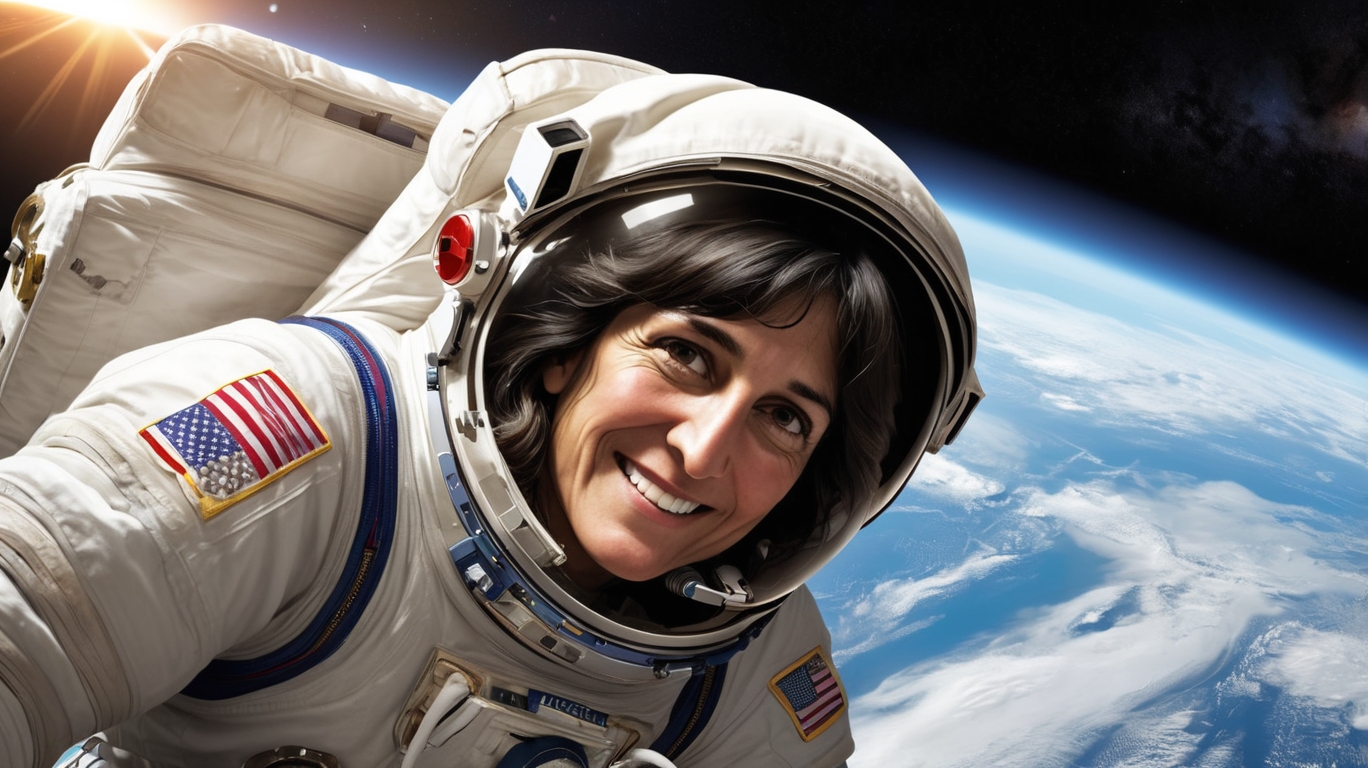
NASA astronaut Sunita Williams and her crewmate Butch Wilmore have successfully made their way back to Earth after an unexpected nine-month mission aboard the International Space Station (ISS). What began as a short test flight soon transformed into a much longer stay, captivating audiences worldwide and highlighting both the risks and resilience involved in human spaceflight.
An Unexpectedly Extended Mission
The pair launched in June 2024 on Boeing’s Starliner spacecraft, scheduled for what was originally designed as an eight-day test flight. However, technical malfunctions with the Starliner’s propulsion system prevented the capsule from safely bringing them back. NASA made the decision to return the Starliner to Earth without its crew while assigning Williams and Wilmore to SpaceX’s Crew-9 mission, which meant extending their time in orbit by several months.
The Dramatic Return to Earth
Their long-awaited return came aboard SpaceX’s Crew Dragon capsule, “Freedom.” Re-entry is always a dramatic moment, as the spacecraft endures extreme heat and pressure. During descent, temperatures outside the capsule climbed to nearly 3,000°F (1,650°C) before a safe splashdown in the Gulf of Mexico near Tallahassee, Florida, at 5:57 PM ET on Tuesday. The successful landing marked the conclusion of one of the most talked-about space missions in recent years.
Life After Space: Rehabilitation on Earth
Spending close to a year in microgravity comes with challenges. Extended weightlessness weakens muscles, reduces bone density, and can even impact eyesight. To help their bodies readapt, Williams and Wilmore will undergo a 45-day rehabilitation program at NASA’s Johnson Space Center in Houston. This recovery phase is designed to restore their strength, balance, and overall health before resuming regular life on Earth.
From “Stranded” to Celebrated
Although NASA stressed that Williams and Wilmore were never truly stranded and could have been evacuated if needed, the public perception was different. Media reports described them as “stuck in space,” and their resilience became a symbol of the unpredictability of space missions. Far from being seen as victims of technical issues, they returned as celebrated astronauts who endured unexpected challenges with composure and professionalism.
A Story of Resilience and Adaptability
Williams’ prolonged spaceflight underscores the adaptability and endurance required of astronauts. Their mission highlights how quickly plans can change in space exploration and how prepared crews must be to adjust in real time.
As commercial space programs continue to grow, and as NASA prepares for missions beyond low Earth orbit, such experiences serve as important lessons for the future. Williams’ journey is not only a personal triumph but also a milestone for space exploration, reminding us of the courage needed to expand humanity’s presence in space.
FAQs
Why was Sunita Williams in space for nine months?
Her planned eight-day mission was extended due to propulsion issues with Boeing’s Starliner, requiring her to remain aboard the ISS.
How did she return to Earth?
She came back safely on SpaceX’s Crew Dragon capsule, Freedom.
What challenges follow long-duration missions?
Extended exposure to microgravity affects muscles, bones, and vision, requiring a structured rehabilitation program.
Was she ever in real danger?
NASA confirmed the astronauts could have been evacuated in an emergency, so their safety was never compromised.