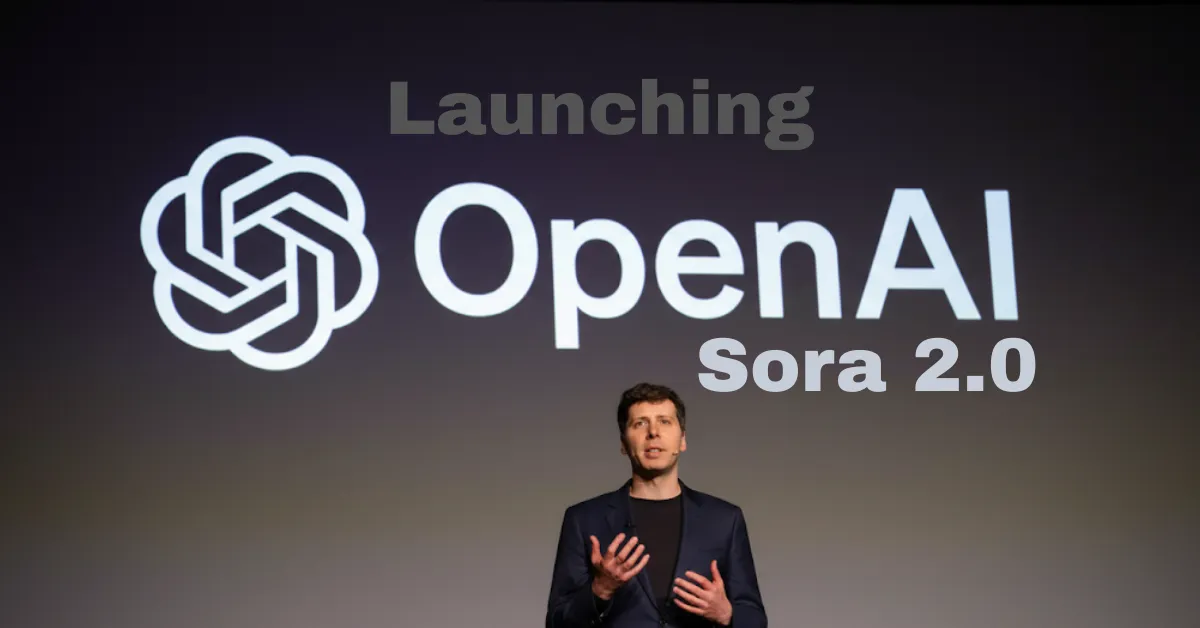
OpenAI has officially unveiled Sora 2, its next-generation video-and-audio creation model, alongside a brand-new invite-only social platform called Sora. The app takes inspiration from TikTok’s short-form vertical feed but with one big difference, every piece of content is AI-generated, not recorded on a camera.
The launch is starting on iOS for users in the U.S. and Canada. Early adopters will enjoy free access, while a Pro tier for higher-quality outputs is available for ChatGPT Pro subscribers. Web access and developer APIs are also on the roadmap.
What’s New in Sora 2
Compared with OpenAI’s earlier video models, Sora 2 delivers a leap forward in realism and control. It features:
- Improved physical accuracy – Videos now display more natural motion and consistent physics.
- Audio synchronization – Dialogue, music, and sound effects match on-screen action.
- Scene control – Creators can design multi-shot sequences with finer detail and direction.
OpenAI frames Sora 2 as a step toward full world simulation, with demos showcasing lifelike sports scenes, action sequences, and cinematic environments.
Inside the Sora Social App
The Sora app takes a familiar approach: a vertical swipeable feed where users can like, comment, and remix clips. But unlike TikTok or Instagram Reels, everything in the feed is generated with Sora models instead of being uploaded footage.
To encourage creativity and quick sharing, early versions limit generation length to short clips, focusing on speed and discovery rather than long-form content. Personalized recommendations also drive what appears in each user’s feed.
“Cameos”: AI With Your Face
A standout feature is Cameos, which allows verified users to appear inside AI-generated videos. The process involves a one-time identity check, after which the user can choose to show up in scenes.
Key safeguards include:
- Opt-in only: No one’s likeness can be used without consent.
- Usage alerts: Users are notified whenever their face appears in generated content.
- Cloning protection: People who haven’t opted in cannot be replicated.
This gives users new creative opportunities while attempting to balance safety and identity control.
Rollout and Access
- Platform: iOS first, with invites in the U.S. and Canada.
- Cost: Free for the initial launch, with an optional Sora 2 Pro upgrade for higher-quality results.
- Other channels: Pro access is available on the web for ChatGPT Pro users.
- What’s next: Broader international rollout and an API release for developers.
For now, Sora 1 Turbo remains active for existing use cases, while Sora 2 is positioned as the flagship for future expansions.
Safety and Policy Framework
To address concerns about AI misuse, OpenAI released a system card and a “launching responsibly” report. The documents outline:
- Disclosure practices to help audiences recognize AI-generated media.
- Risk mitigation strategies for misinformation, identity misuse, and harmful content.
- Moderation policies adapted specifically for video and audio generation at scale.
Still, questions remain about copyrighted training data and how OpenAI will collaborate with studios and creators, issues the company promises to tackle as adoption grows.
Why This Matters
By launching its own AI-native video platform, OpenAI reduces reliance on third-party social apps and gains more control over:
- Recommendations – shaping how people discover AI video.
- Creator tools – giving users an all-in-one space for generating and sharing.
- Monetization – building future revenue streams around AI pipelines.
The short-form format is already familiar to billions of viewers, meaning mainstream adoption could accelerate quickly.
Competitive Landscape
The timing of Sora’s debut comes as Google and Meta race to advance their own AI video technologies. Google is expanding Veo integration, while Meta continues to test AI video tools within Instagram and Facebook.
OpenAI’s invite-only, mobile-first strategy mirrors its earlier rollouts of ChatGPT and DALL·E, which grew gradually after testing for safety and scalability.
What’s Next to Watch
Looking ahead, key developments will include:
- International availability beyond North America.
- Pro features inside the mobile app (not just on the web).
- API launch for developers building creative apps and editorial workflows on Sora 2.
- Expanded safety measures around likeness verification, watermarking, and content provenance.


