Elon Musk has once again ignited a major online trend, this time calling on followers to “Cancel Netflix.” The billionaire’s posts turned what began as a limited online debate about children’s programming into a high-profile cultural flashpoint that even shook Netflix’s market value for a brief period this week.
Analysts estimate the controversy may have wiped out billions in market capitalization at its peak, as social media feeds filled with boycott hashtags, screenshots of canceled subscriptions, and heated commentary about platform responsibility.
What Sparked the Trend
The controversy centers on the animated Netflix series Dead End: Paranormal Park, which features a transgender main character. Conservative commentators highlighted the show as an example of what they see as inappropriate content for young viewers.
The backlash intensified after allegations surfaced about the show’s creator, Hamish Steele, and his social media activity following the fatal shooting of conservative activist Charlie Kirk at a Utah event. These posts were widely circulated, fueling outrage and calls for a boycott across X (formerly Twitter) and other platforms.
Musk’s Role in Amplifying the Movement
The debate might have remained niche, until Elon Musk stepped in. Over several days, Musk shared and repeated the phrase “Cancel Netflix” across his massive social following, reshaping a small online protest into a viral global discussion.
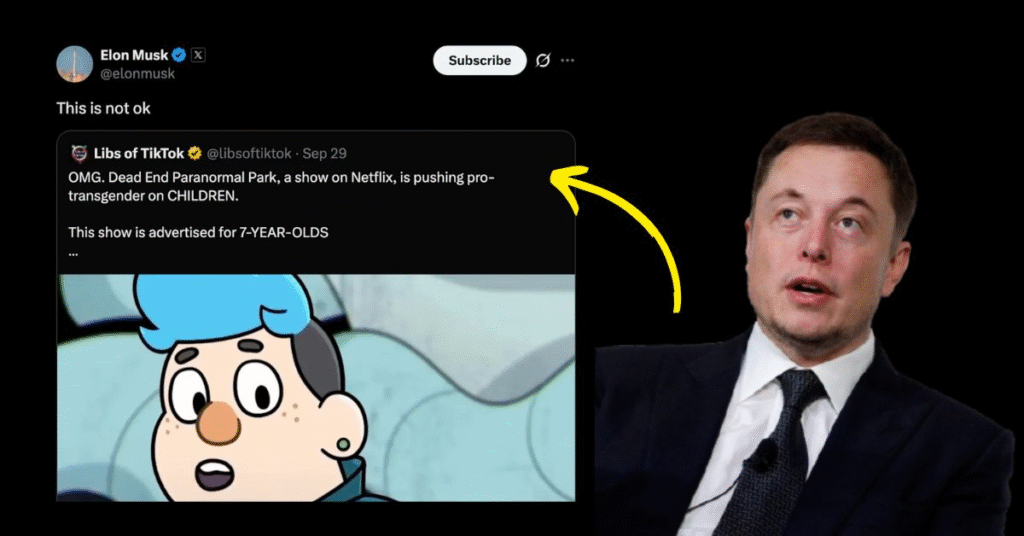
His involvement turned the issue from a localized cultural skirmish into a mainstream consumer movement, drawing in people far beyond typical media circles. Social monitoring reports counted dozens of posts and reposts from Musk alone, which helped keep the topic trending for days and pushed it into broader news coverage.
Market Reaction and Financial Impact
As the campaign gained traction, Netflix’s stock faced noticeable short-term pressure. Reports from financial analysts suggested the company’s market value briefly dipped by roughly $15 billion, reflecting both investor caution and headline risk.
Experts, however, cautioned that such market swings are often temporary. Short-term share volatility, they noted, does not necessarily translate into a measurable loss of subscribers, though it does signal how sensitive streaming stocks remain to cultural debates and online sentiment.
Netflix’s Response
So far, Netflix has not released an official statement specifically addressing the renewed controversy or Musk’s comments. The platform previously canceled Dead End: Paranormal Park after two seasons, but the series remains available for streaming, which allowed old clips to resurface and fuel the current wave of criticism.
Coverage from various outlets has instead focused on reactions from creators and commentators, and how this incident ties into ongoing conversations about content moderation and parental control on major streaming platforms.
Why the Debate Resonates
This episode connects to a broader cultural conversation about how LGBTQ+ representation appears in children’s entertainment. Critics argue it reflects an agenda in youth programming, while supporters view it as inclusive storytelling.
Musk’s entry reframed the topic entirely, turning a discussion about one show into a larger narrative about consumer choice, free expression, and corporate accountability. It also highlights how a single influential figure can shape online sentiment and even influence stock performance in real time.
Timeline Snapshot
- Late September: Social posts about Hamish Steele’s alleged remarks following the Charlie Kirk shooting start circulating.
- Following Days: Musk begins posting “Cancel Netflix,” propelling the phrase into trending territory.
- End of Week: News outlets report on Netflix’s share decline and the escalating cultural debate over children’s media.