Key Points
- More than 1,000 American Airlines flights were disrupted nationwide in a single day, according to multiple reports.
- A Charlotte-to-Jamaica flight was forced to return to its origin due to disruptive passengers; separate removal incidents also occurred.
- Contributing factors appear to include operational strains, crew shortages, and weather-related ripple effects, though details are still emerging.
- Impacted travelers may be eligible for rebooking or refunds under U.S. Department of Transportation (DOT) guidelines.
What Happened
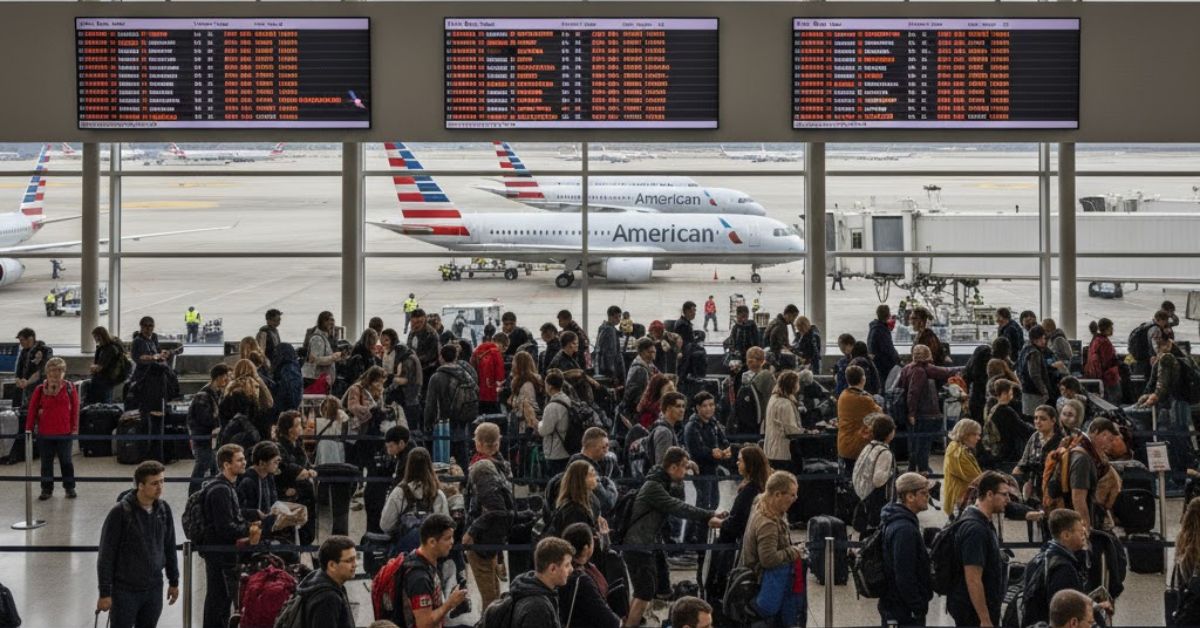
American Airlines faced a cascade of disruptions over the weekend, creating widespread frustration among passengers across its network. Reports indicate that more than 1,000 flights were delayed or canceled in just 24 hours, one of the most severe operational breakdowns the carrier has experienced recently.
Compounding the chaos, a Jamaica-bound flight from Charlotte (CLT) was forced to return to the airport shortly after takeoff when disruptive passenger behavior escalated beyond the crew’s control. Law enforcement officers met the plane upon arrival, and the involved passengers were removed without major reported injuries.
The incident added further tension to an already strained day for the airline, as travelers shared images and complaints across social media about long lines, missed connections, and limited customer support access.
Understanding the 1,000+ Flight Disruptions
Industry analysts and aviation tracking data suggest the mass disruption stemmed from a mix of weather impacts, crew timing limitations, and air traffic control congestion, a combination that can quickly trigger cascading delays across a tightly scheduled network.
Once a few key flights are delayed, especially at hub airports like Dallas–Fort Worth (DFW) and Charlotte (CLT), the resulting domino effect can impact dozens of subsequent departures and arrivals nationwide.
Why This Matters for Travelers
When operational disruptions reach this scale, the effects ripple far beyond the initial delays:
- Broken connections: Even short delays at major hubs can cause travelers to miss onward flights.
- Limited rebooking options: As flights fill, same-day alternatives become scarce, especially on popular routes.
- Customer service overload: Phone lines, airport counters, and live chat systems often face hours-long backlogs.
What To Do If You’re Affected
If you find yourself caught in a mass disruption event like this, here are actionable steps to minimize stress and loss:
- Use the mobile app first. The American Airlines app allows same-day flight changes, standby options, and rebookings faster than in-person queues.
- Ask about partner airlines. American is part of the oneworld alliance, you may be eligible for rebooking on partners like British Airways or Alaska Airlines.
- Know your rights. Under DOT rules, you are entitled to a refund if your flight is canceled or significantly delayed and you choose not to travel.
- Request vouchers when appropriate. For controllable issues such as crew shortages, AA may provide meal or hotel vouchers for overnight delays.
- Keep documentation. Save screenshots of alerts, receipts, and gate announcements to support any future reimbursement claims.
- Book early flights. Morning departures have better odds of operating on time and offer more recovery options if issues arise.
- Explore nearby airports. When hubs are congested, alternative airports like RDU, ATL, DCA, IAD, or BWI may have better availability.
Safety and In-Flight Conduct
When disruptive behavior occurs onboard, flight crews are obligated by FAA safety regulations to act swiftly. Returning to the departure airport is a standard safety measure when de-escalation fails.
Passengers who engage in threatening or non-compliant behavior risk removal, bans from future travel, and possible legal charges. For everyone else, following crew instructions helps ensure safety and minimize further disruption.
Operational Insights: What This Reveals
The events highlight several ongoing challenges within the U.S. aviation system:
- Tight Scheduling: Airlines continue to operate with minimal buffer in aircraft and crew rotations.
- Hub Dependence: Major hubs like Charlotte and Dallas–Fort Worth are pressure points, when delays build, the entire network suffers.
- Weather Sensitivity: Even localized storms or ATC delays can rapidly multiply across interconnected routes.
Traveler takeaway: To protect your plans, book early flights, build longer layovers, and choose flexible tickets when timing is critical.
Traveler Checklist for AA Disruptions
✔ Rebook via the American Airlines app before approaching airport counters.
✔ Search and suggest specific alternate flights when speaking with agents.
✔ Request hotel or meal support if delays stem from controllable causes.
✔ If you choose not to travel, request a refund instead of a travel credit.
✔ Track checked baggage through the app and confirm delivery if rebooked.
FAQs
Was this caused by a system outage?
No widespread IT outage has been confirmed. The disruptions appear to result from multiple operational stressors rather than a single failure.
Are passengers entitled to compensation?
Travelers can request refunds for cancellations or significant delays under U.S. DOT rules. Additional compensation depends on airline policy and cause.
How can I avoid similar issues?
Book morning departures, allow extra time for connections, and monitor weather or ATC advisories 24–48 hours before departure.