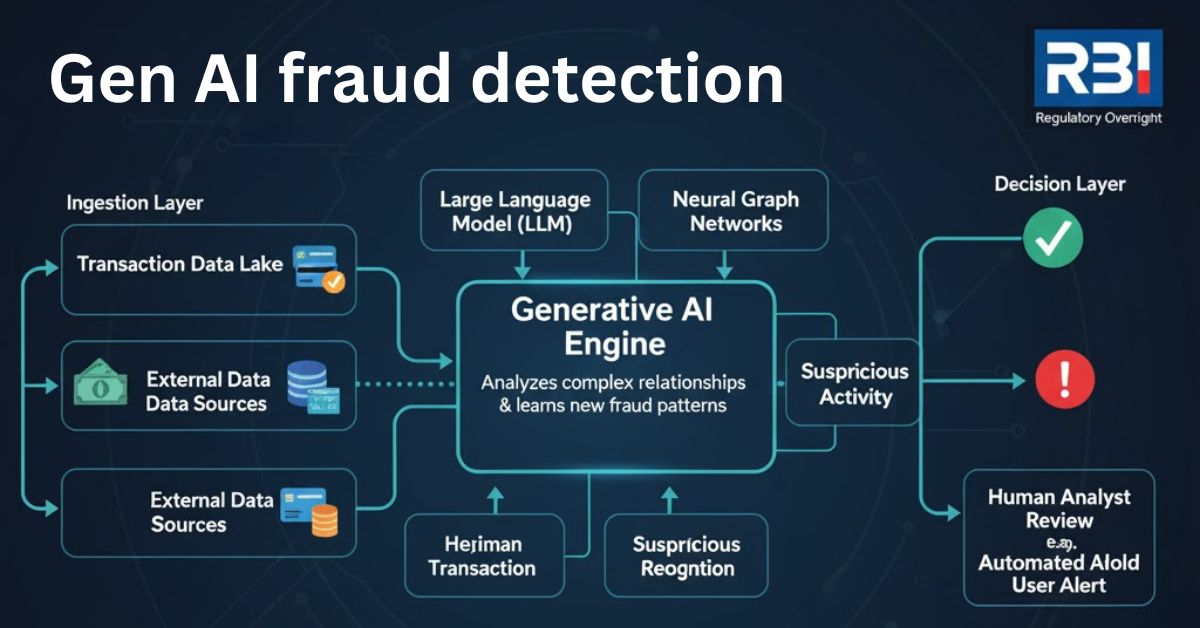
Mumbai, India – The Reserve Bank of India (RBI) is intensifying its oversight of the use of Generative AI in the Banking, Financial Services, and Insurance (BFSI) sector, according to senior officials. While the central bank acknowledges the immense potential of GenAI to enhance efficiency and customer service, it is also focusing on establishing robust guardrails to manage the associated risks. Key themes of the RBI’s oversight include the use of AI for advanced fraud detection, ensuring model fairness, and promoting the responsible deployment of these powerful technologies.
Indian banks and financial institutions are rapidly adopting GenAI for a variety of use cases, from personalized customer support chatbots to AI-powered co-pilots that assist wealth managers. However, one of the most promising applications is in the fight against financial crime. New GenAI-powered fraud detection systems are moving beyond simple rule-based alerts. They can analyze vast, unstructured datasets, including transaction narratives, customer communications, and network linkages, to identify highly complex and novel fraud patterns in real-time. The RBI is encouraging banks to invest in these advanced systems but is also mandating stringent validation and testing to ensure their accuracy and reliability.
A major area of focus for the RBI is the theme of ‘Responsible AI’. The regulator is concerned about the ‘black box’ nature of some complex AI models and the potential for algorithmic bias to lead to unfair outcomes, such as the discriminatory denial of loans. The RBI is expected to issue guidance requiring banks to maintain a high degree of transparency and explainability in their AI models used for credit scoring and other critical decisions. Banks will need to be able to demonstrate to auditors and regulators how their AI systems arrive at their conclusions.
The RBI is promoting a culture of ‘prudent innovation,’ urging financial institutions to establish strong internal governance frameworks for AI. This includes setting up dedicated ethics committees, conducting regular risk assessments, and ensuring that there is always meaningful human oversight in critical processes. The central bank’s approach is not to stifle innovation but to ensure that the integration of GenAI into the financial system is done in a manner that enhances security, protects consumers, and maintains the stability of the sector.