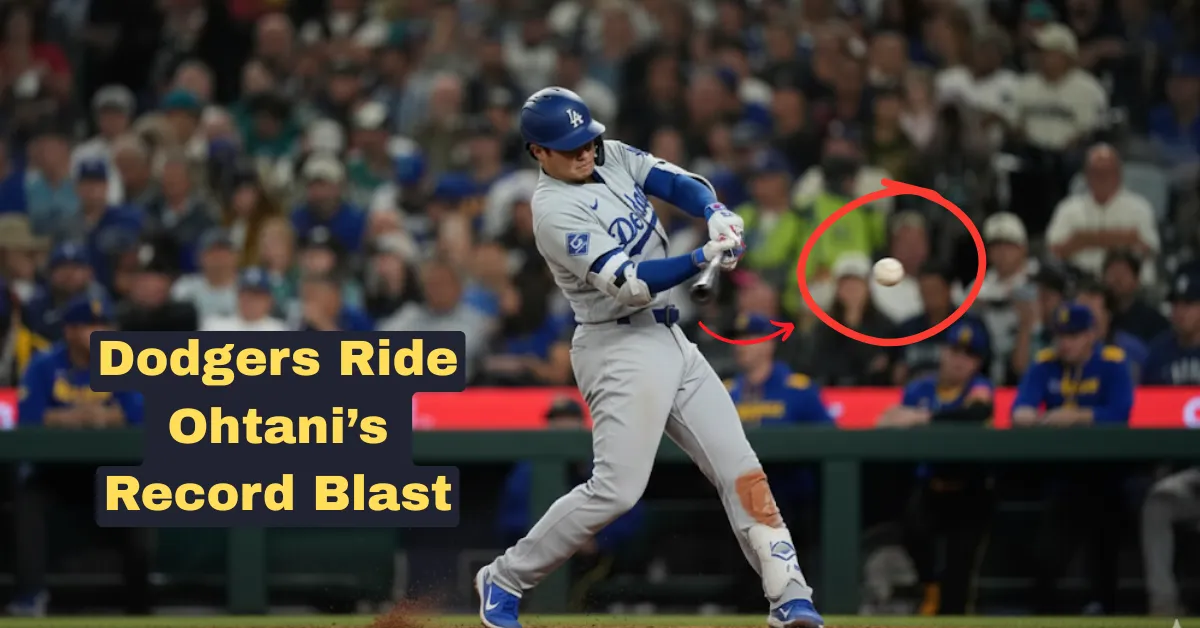
Ohtani’s 117.7 mph Leadoff Statement
From the very first pitch, the Dodgers made sure the Reds were playing from behind. Shohei Ohtani opened Los Angeles’ postseason with a jaw-dropping 117.7 mph homer off a 100-plus mph fastball, the hardest-hit home run ever tracked off triple-digit velocity in Statcast history. That early swing didn’t just electrify Dodger Stadium; it immediately shifted win probability toward L.A. and set the tone for an offensive onslaught.
Ohtani wasn’t done, later adding a second homer, becoming one of the few players in the Statcast era to log multiple 113+ mph home runs in the same playoff game. He and Teoscar Hernández went blow-for-blow, combining for four of the Dodgers’ five long balls in a 10–5 win that never looked in doubt.
Snell Rewrites the October Script
Blake Snell, often shadowed by “third-time-through” concerns in October, delivered his sharpest postseason outing yet. The lefty worked seven innings on 91 pitches, striking out seven while keeping traffic light and pace brisk. It was the longest playoff start of his career and, just as importantly, it simplified Dave Roberts’ bullpen map.
Instead of juggling leverage arms late, the Dodgers handed over a comfortable cushion to a rested relief crew, eliminating the volatility that often swings October games. For Cincinnati, starter Hunter Greene was stung for three of the five Dodgers homers, exposing how L.A. aggressively hunted high fastballs and punished missed spots.
How Los Angeles Built a Lead That Stuck
The strategy was intentional: attack early, swing big, and avoid long counts against power arms. By the third inning, Cincinnati was already in chase mode after Freeman and Max Muncy drew back-to-back walks, setting up Hernández’s three-run blast. Add in Tommy Edman’s homer and the Dodgers tied their postseason franchise record with five long balls, making sure the Reds never sniffed a lead.
With the exit velocity battle tilted firmly toward L.A., the only job left was sequencing outs. Snell’s efficiency kept stress low, and the Dodgers’ bullpen merely had to protect margins rather than fight leverage fires.
Game 2: What, When, Where
- Start time & TV: 9:08 p.m. ET on ESPN (also streaming on the ESPN app and Fubo).
- Probable starters: Yoshinobu Yamamoto (Dodgers) vs. Zack Littell (Reds).
- Series setup: Best-of-three at Dodger Stadium; Game 3, if needed, also starts at 9:08 p.m. ET in the same prime-time window.
Keys and Micro-Trends to Watch
- Yamamoto’s approach: Expect plenty of splitters against Cincinnati’s right-handed core, plus an emphasis on first-pitch strikes to keep the pitch count manageable.
- Reds’ counterpunch: After getting burned by early swings on heaters, Cincinnati must decide whether to grind at-bats for walks or flip the script and hunt off-speed early.
- Dodgers’ leverage advantage: Thanks to Snell’s seven innings in Game 1, Roberts has his top relievers fresh. If Yamamoto reaches six innings, L.A. can stay flexible with matchups.
Sidebar Storylines
- Freddie Freeman’s table-setting: His third-inning walk was the spark for Hernández’s three-run shot, highlighting how free passes against this lineup are lethal.
- Kiké Hernández’s opportunity: With Michael Conforto off the Wild Card roster, Hernández drew the start in left field and extended his late-season hot streak (OPS near 1.000 over his final eight games).
- Joe Kelly moment: The fan-favorite threw out the ceremonial first pitch before Game 1, a fun flashpoint already bouncing around social media highlights.